
Why Applications for Dropped Kerbs Might Be Refused – A Guide for Homeowners
DKP are specialists in preparing drawings and planning applications for driveways, dropped kerbs and vehicular accesses.
Read below how we help our costumers.
Applying for a dropped kerb may seem like a straightforward process—a practical improvement to provide off-street parking, enhance convenience, or even increase property value.
Local Highway Authorities apply a stringent set of criteria to ensure that safety, infrastructure integrity and wider community needs are not compromised. As a result, dropped kerb applications are sometimes refused—often to the frustration of homeowners who applied themselves without expert guidance and who were therefore unaware of the requirements in advance.
In this post, we explore the most common reasons why dropped kerb applications might be rejected, drawing on DKP’s guidance and professional experience supporting applicants through the planning and approval process.
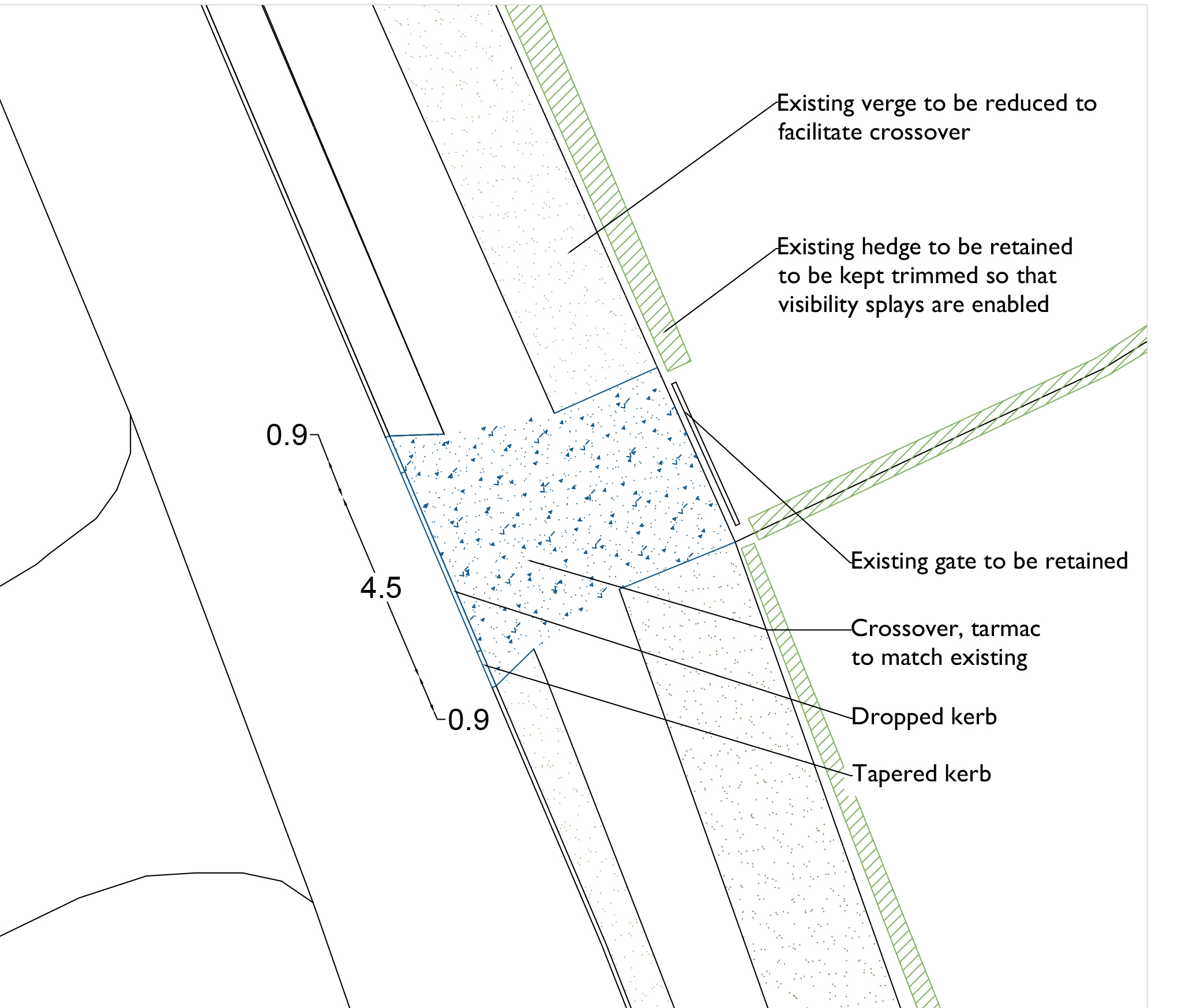
1. Inadequate Space for Off-Street Parking
Perhaps the most overlooked reason for refusal is insufficient space within the applicant’s property to accommodate a parked vehicle safely. Highway authorities generally require enough depth and width to ensure a vehicle can be parked without overhanging the pavement or adjacent carriageway.
Most Local Authorities usually mandate a minimum of 4.8 metres in depth and 2.4 metres in width for perpendicular parking. If the parking space is in front of a garage or access door, this depth increases to 6 metres. Properties that fall short of these dimensions will be refused on the basis that overhang creates a hazard for pedestrians and other road users. Crucially, these measurements are assessed independently of the size of any current vehicle—larger SUVs or vans will not be accommodated by exception.
2. Proximity to Junctions, Crossings, and Bus Stops
Safety remains the overriding priority in any application for highway works. Dropped kerb proposals that are too close to road junctions, pedestrian crossings, or bus stops are likely to be refused outright.
Usually dropped kerbs must be located at least 10 metres from a road junction, increasing to 15 metres in the case of major or heavily trafficked roads. Similarly, any proposed crossing within 20 metres of a controlled pedestrian crossing is unlikely to be considered. The rationale is straightforward: access points too close to traffic controls or pedestrian facilities increase the risk of collisions and obstruct visibility, both for drivers and for vulnerable road users.
Proposals that impede a bus stop’s functionality—by preventing buses from safely pulling in and out—are also problematic. While relocation of the bus stop may be theoretically possible, it is rarely feasible and always at the applicant’s expense.
3. Visibility and Sightline Failures
One of the most technical yet decisive factors in determining an application is whether adequate visibility can be achieved from the proposed access. Site-specific inspections by experienced officers assess both pedestrian and vehicular visibility.
Local Authorities require a pedestrian visibility splay of at least 2 metres by 2 metres, measured from the back of the footway and no higher than 0.6 metres. Obstructions—such as walls, hedges, fences, or parked cars—that breach this height within the splay can render a location unsafe and lead to refusal.
Vehicular visibility, or “carriageway sightlines,” are measured according to speed limits. For a 30mph road, an unobstructed Y-dimension of 43 metres is required from a setback (X-dimension) of 2.4 metres. These requirements become more stringent on faster roads. If the geometry of the site or neighbouring properties prevents visibility within these parameters, the application will likely fail.
4. Highway Trees and Root Protection Zones
The presence of a highway tree within 15 metres of the proposed dropped kerb can be a significant barrier to approval.
Applicants must undertake a tree root protection area (RPA) calculation based on the diameter of the tree at 1.5 metres above ground. If construction will encroach on this protection area, the application should not be submitted unless adjustments are made to avoid harm. Even then, success is not guaranteed.
This is particularly frustrating for homeowners who had assumed that the local authority would remove or relocate a tree as part of the application process. In truth, councils are under increasing pressure to protect urban trees and enhance biodiversity, not reduce it.
5. Conflict with Street Furniture and Utility Apparatus
Another common reason for refusal lies in the practical constraints posed by existing street infrastructure. Items such as BT and Virgin Media covers, fire hydrants, street name signs, telegraph poles and directional signage can all affect the feasibility of installation. Where these features lie within or adjacent to the proposed dropped kerb area, relocation or protection may be necessary.
While applicants can seek approval from the asset owners in advance, this can be time-consuming, costly, and is not always successful. All such costs—alongside the responsibility for securing third-party consent—rest with the client. Failure to secure these before application submission is grounds for refusal.
6. Gates That Open Onto the Highway
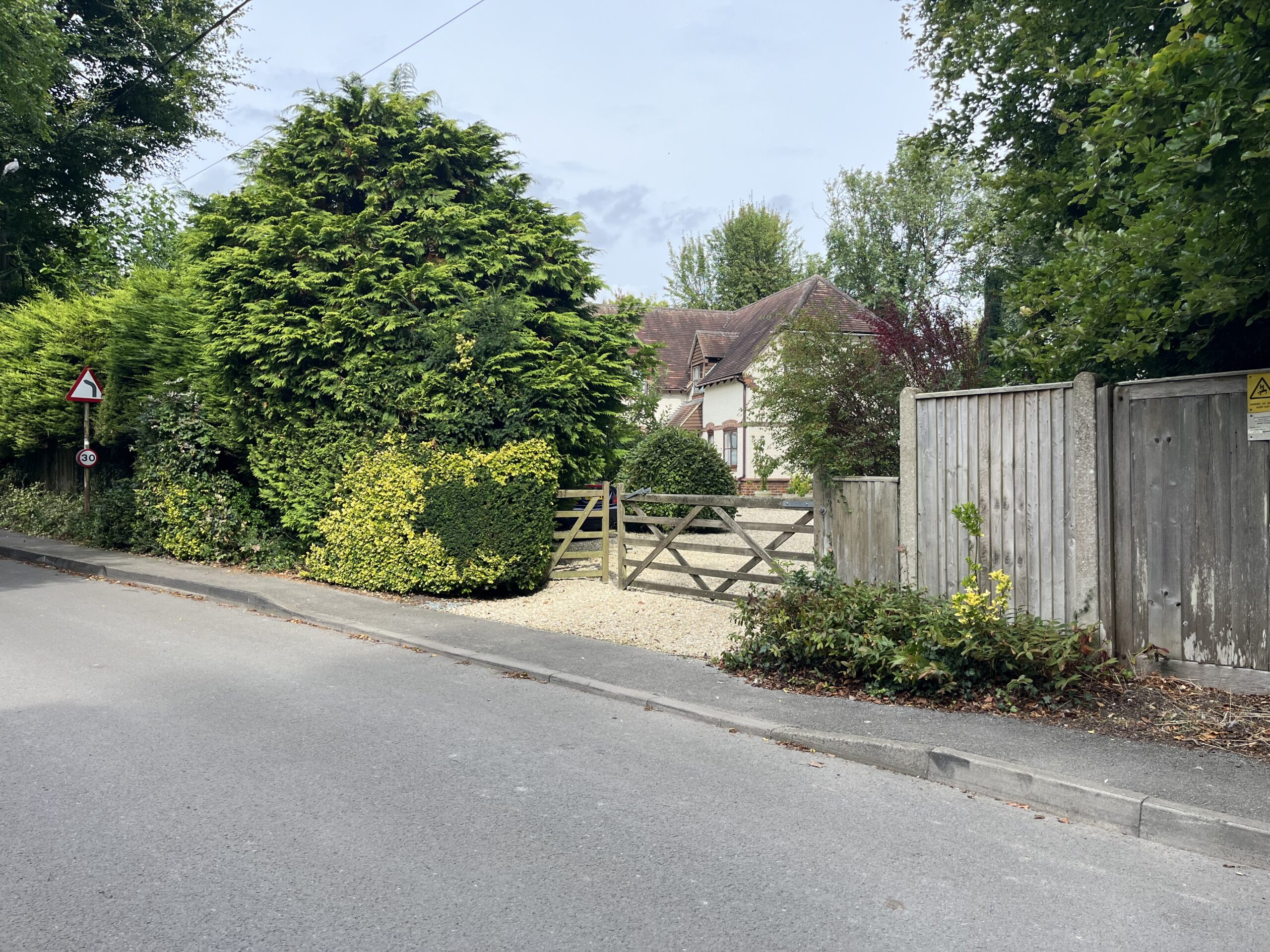
In cases where the proposed access includes gates, there must be sufficient clearance within the site boundary to ensure that gates do not open outward onto the public highway. A clear distance of at least 5.5 metres must be provided so that vehicles can pull in safely without obstructing the pavement or road. If this clearance cannot be demonstrated, especially in tight urban plots, applications will not be approved.
7. Drainage Concerns
Sustainable drainage is another increasingly scrutinised consideration. Hardstanding areas must be constructed with permeable surfacing or have adequate drainage provisions to prevent surface water from running off into the public highway. Failure to account for drainage requirements—such as through the use of impermeable materials without appropriate soakaways—may lead to refusal or an enforcement issue following installation.
8. Planning Permission and Legal Authority
Lastly, many home owners mistakenly believe that planning approval from the local district or borough council automatically authorises construction of a dropped kerb. In fact, this is only one part of the process. The highway authority retains separate and final authority over any work affecting the public highway. This is called the licence application or a crossover application and this application remains the client’s responsability.
Applicants must also be the freeholder of the property or hold written permission to apply. Lack of evidence in this regard, or disputes with neighbours over boundary issues, can result in a delay or rejection. It is worth noting that Local Authorities do not mediate neighbour disputes and do not consult third parties on applications unless broader community impacts are identified.
Conclusion: Preparation Is Key to Avoiding Disappointment
The refusal of a dropped kerb application can be both costly and disappointing.
The good news is that most refusals are entirely avoidable. By carefully reviewing the criteria, undertaking a thorough self-assessment, and—where necessary—seeking our professional planning support before applying, homeowners can avoid many of the pitfalls that lead to unsuccessful applications.
At Dropped Kerb Planning, we specialise in guiding homeowners through this process, providing expert advice and transparent assessments to maximise the chance of a successful outcome. Our Chartered Landscape Architect and Town Planner-led approach ensures that applications are not only functional and safe but also sensitive to visual and environmental context—an increasingly important consideration for councils under pressure to protect the character and biodiversity of local streetscapes.
If you’re considering a dropped kerb and want to ensure that your application stands the best chance of success, contact us for a free initial assessment. With expert guidance, what can seem like an intimidating process becomes manageable, efficient, and—above all—successful.
Conclusion
Hiring DKP brings professional expertise and detailed planning to your dropped kerb project, reducing the risk of planning refusals and ensuring compliance with local regulations. Our ability to foresee potential issues, navigate complex planning processes, and provide tailored solutions makes us invaluable for any dropped kerb application. By avoiding common mistakes such as poor safety planning, inadequate drainage, and non-compliance with local policiesDKP will save you time, money, and stress, ultimately leading to a successful project.


