
How to get planning permission for a dropped kerb
DKP are specialists in preparing drawings and planning applications for driveways, dropped kerbs and vehicular accesses.
Read below how we help our costumers.
A dropped kerb allows vehicles to cross a public footpath to access a private driveway. However, securing planning permission for one isn’t always straightforward. Local councils impose strict criteria to ensure safety and accessibility. Here’s what you need to know about getting planning permission for a dropped kerb and the key considerations that could impact your application.
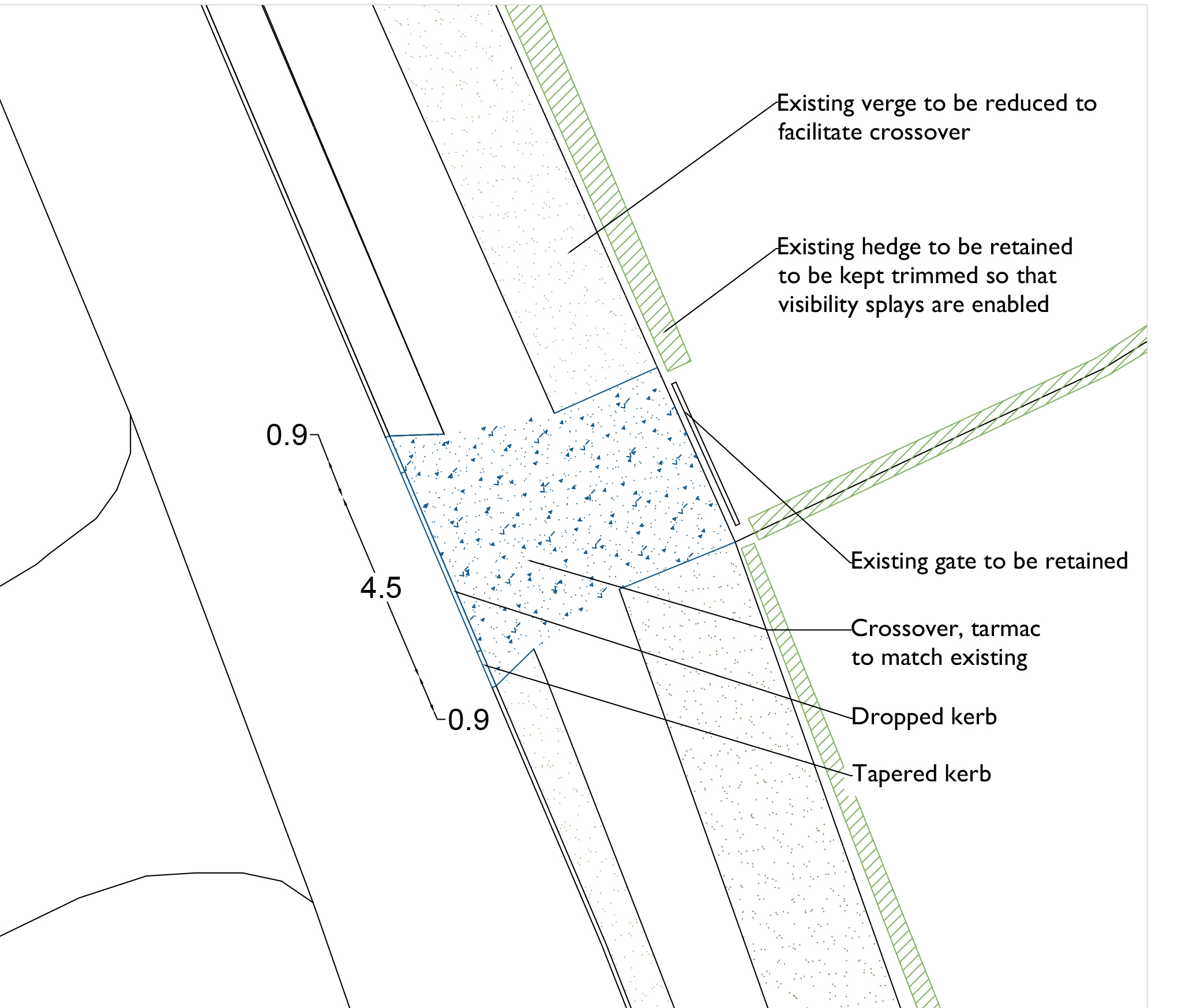
Dropped Kerb Rules
1. Is There Enough Space in Your Garden?
Your driveway must have enough space to accommodate a vehicle without overhanging the pavement or road. Generally, the minimum required length is 4.8m from the back of the pavement to your building. If you have a garage, this distance increases to 6m to allow space for opening and closing the doors safely.
2. Is the Access Wide Enough?
The minimum width required for a dropped kerb is 2.4m through the entire parking bay. This ensures a vehicle can enter and exit without difficulty. If there are obstructions such as trees or bay windows, adjustments may be required.
3. Separate Entrance and Exit
Typically, councils discourage multiple access points for a single property as they increase traffic risks. If you wish to have separate entrance and exit points, you must provide strong evidence that it enhances safety.
4. Distance from Road Junctions
For safety reasons, your proposed dropped kerb must be at least 10m away from a road junction. On busy roads, this distance could increase to 15m or more.
5. Visibility Requirements
Your proposed driveway must allow clear visibility of pedestrians and vehicles. Councils assess sight lines based on:
- 2.0m setback from the footway
- No obstructions above 0.6m in height
- A visibility distance of up to 120m on roads with a 40mph speed limit
6. Drainage Considerations
Water from your driveway must not flow onto the public highway. You may need to install suitable drainage within your property boundaries to comply with local regulations.
7. Lighting Columns and Street Furniture
If your proposed access point is within 1.5m of a lamppost, signpost, or utility cabinet, you may be required to pay for its relocation, adding to your costs.
8. Trees
If a tree is in the way of your proposed driveway, councils may allow its removal under strict conditions, often requiring the planting of two replacement trees elsewhere. The cost of removal and replanting can exceed £3,000.
9. Statutory Services (Gas, Water, Electricity, etc.)
Utility infrastructure such as gas mains, water pipes, or telecom cabinets may be affected by your proposed dropped kerb. You will need approval from the relevant service provider, and relocation costs will be your responsibility.
10. Gates
If you plan to install gates at your driveway entrance, they must not open outwards onto the highway. On busy roads, gates should be set back at least 5m to allow vehicles to stop safely while opening them.
11. Parking Bays
If your property is in a controlled parking zone with marked parking bays, you may need approval to alter them before applying for a dropped kerb. Some councils may reject applications if it leads to a loss of public parking spaces.
12. Bus Stops
If a bus stop is nearby, your application may be refused unless it can be demonstrated that bus access will not be affected. Councils are unlikely to relocate bus stops to accommodate private driveways.
13. Freeholder or Leaseholder Consent
If you are a leaseholder (with under 7 years remaining on your lease), you must obtain written consent from the freeholder before applying for a dropped kerb.
14. Classified Roads & Conservation Areas
For properties on classified roads (A, B roads) or in conservation areas, additional planning permissions may be required. You might need to prove that the driveway allows safe turning so that vehicles can enter and exit in forward gear.
15. Kerb Length
Most councils restrict the width of dropped kerbs to 5.4m, excluding transition kerbs. Wider driveways may be refused to maintain kerbside parking and accessibility for visually impaired pedestrians.
16. Gradients
The gradient of your driveway must not exceed 10% within 5m of the pavement. Excessive slopes can obstruct visibility and increase the risk of vehicles rolling into the road.
17. Traffic Calming Measures
If traffic calming measures such as speed bumps or chicanes are near your proposed access point, your application might be refused to prevent interference with their effectiveness.
Planning mistakes that lead to a refusal of your dropped kerb
When applying for planning permission for a dropped kerb, there are several common mistakes that can lead to refusals. These errors can often be avoided with careful planning and attention to detail, which is where a Chartered Landscape Architect’s expertise becomes invaluable.
1. Failure to Meet Safety Standards
One of the most common reasons for planning refusals is failure to comply with safety standards. Councils must ensure that a dropped kerb does not pose a danger to road users or pedestrians. Mistakes such as positioning a kerb too close to a junction, on a busy road without adequate visibility, or near pedestrian crossings can all lead to planning refusal.
Our Chartered designers are well-versed in safety standards, such as visibility splays and distance from junctions, ensuring that the proposed kerb meets all safety regulations.
2. Inadequate Drainage Solutions
Dropped kerbs can contribute to surface water run-off, which may increase the risk of flooding if not managed correctly. Many planning applications are refused because they fail to incorporate proper drainage systems, particularly in areas prone to flooding.
Working with our Chartered Highways specialists ensures that your design includes appropriate drainage solutions, such as permeable materials, soakaways, or Sustainable Drainage Systems (SuDS), that meet local authority standards.
3. Poor Quality or Incomplete Applications
Incomplete or poorly prepared planning applications are often rejected outright. Missing documentation, inaccurate plans, or failure to address specific local planning concerns can result in costly delays and refusals. Many people underestimate the complexity of preparing a full planning application, including site plans, design statements, and environmental assessments.
DKP will provide accurate and complete documentation, ensuring that your application has all the necessary components and is presented professionally.
4. Non-Compliance with Local Policies
Each local authority has its own specific policies regarding dropped kerbs, and failure to adhere to these can lead to planning refusal. For example, some councils may have strict rules regarding conservation areas, visibility requirements, or the impact on public utilities like water drainage or gas lines.
At DKP we are familiar with local policies and planning requirements, ensuring that the design complies with all relevant regulations. We will also advise on any additional considerations required for conservation areas or listed buildings.
5. Ignoring Environmental or Heritage Concerns
Properties located in conservation areas, near listed buildings, or within environmentally sensitive zones are subject to stricter planning controls. Failure to address these concerns can lead to planning refusals, as councils are particularly stringent when it comes to protecting heritage and environmental features.
We are experienced in working within these constraints, ensuring that designs are sympathetic to the local environment and meet all heritage protection requirements.
6. Inadequate Space for Parking
Many councils have minimum requirements for the size of the parking area associated with a dropped kerb. If the driveway is too short or narrow, leading to cars overhanging the pavement or obstructing foot traffic, the application is likely to be rejected.
At DKP we will advise you on any constraints present and will design the parking space to ensure it meets local authority standards, avoiding issues that could lead to planning refusals.
Conclusion
Hiring DKP brings professional expertise and detailed planning to your dropped kerb project, reducing the risk of planning refusals and ensuring compliance with local regulations. Our ability to foresee potential issues, navigate complex planning processes, and provide tailored solutions makes us invaluable for any dropped kerb application. By avoiding common mistakes such as poor safety planning, inadequate drainage, and non-compliance with local policiesDKP will save you time, money, and stress, ultimately leading to a successful project.
Conclusion
Hiring DKP brings professional expertise and detailed planning to your dropped kerb project, reducing the risk of planning refusals and ensuring compliance with local regulations. Our ability to foresee potential issues, navigate complex planning processes, and provide tailored solutions makes us invaluable for any dropped kerb application. By avoiding common mistakes such as poor safety planning, inadequate drainage, and non-compliance with local policiesDKP will save you time, money, and stress, ultimately leading to a successful project.


